

Swim Cap Manufacturer Insights for Choosing Durable and Comfortable Swim Caps
2026-09-02
Ever yanked a swim cap over your head only to feel it snap back or tear mid-lap? Most swimmers blame themselves—but the real culprit is often a manufacturer cutting corners on silicone blends and seam design. At OCORT, we've spent years reverse-engineering why some caps survive daily chlorine while others crack in weeks. These manufacturer insights pull back the curtain on what actually separates a durable, comfortable swim cap from a disposable one—and how to choose one that fits like a second skin.
What Material Actually Survives Chlorine and Sun?
If you have ever replaced pool furniture every other summer, the problem is rarely the stitching or the frame—it is the fabric quietly breaking down under a one-two punch of chlorine splash and UV exposure. Most standard outdoor textiles fade first, then turn brittle, because the dyes and fibers are not built for constant chemical contact. The materials that genuinely hold up are usually solution-dyed acrylic, certain marine-grade vinyl, and some tightly woven polyester blends treated with UV stabilizers. What sets them apart is not just a coating on the surface; the color runs all the way through the yarn or the polymer itself, so chlorine cannot strip it away the way it does with printed or piece-dyed fabric.
Solution-dyed acrylic is the closest thing to a default answer for poolside use. Brands built on this fiber resist fading for years because the pigment is locked inside the fiber before it is spun, not applied afterward. It also dries quickly and does not promote mildew the way natural canvas does. Marine-grade vinyl, on the other hand, wins when you need something wipeable and fully waterproof, though it can get hot in direct sun and may crack over time if it is not formulated with enough plasticizer and UV inhibitor. For cushions, slings, and umbrellas, a heavy solution-dyed acrylic or a UV-stabilized polyester with a high thread count tends to outlast cheaper alternatives by a wide margin.
The honest caveat is that no material is completely immune forever. Chlorine will eventually degrade even the best polymers if it sits pooled on the surface, and intense sun breaks down everything given enough years. What you are really buying with these higher-end fabrics is a much slower decline and an appearance that stays presentable long after budget fabrics have turned chalky and torn. Rinsing furniture after heavy pool use and storing cushions out of direct sun during the off-season extends that lifespan dramatically, but the base material still has to be built for the environment from the start.
The Goggle-Cap Clash: Designing for Non-Slip Edges
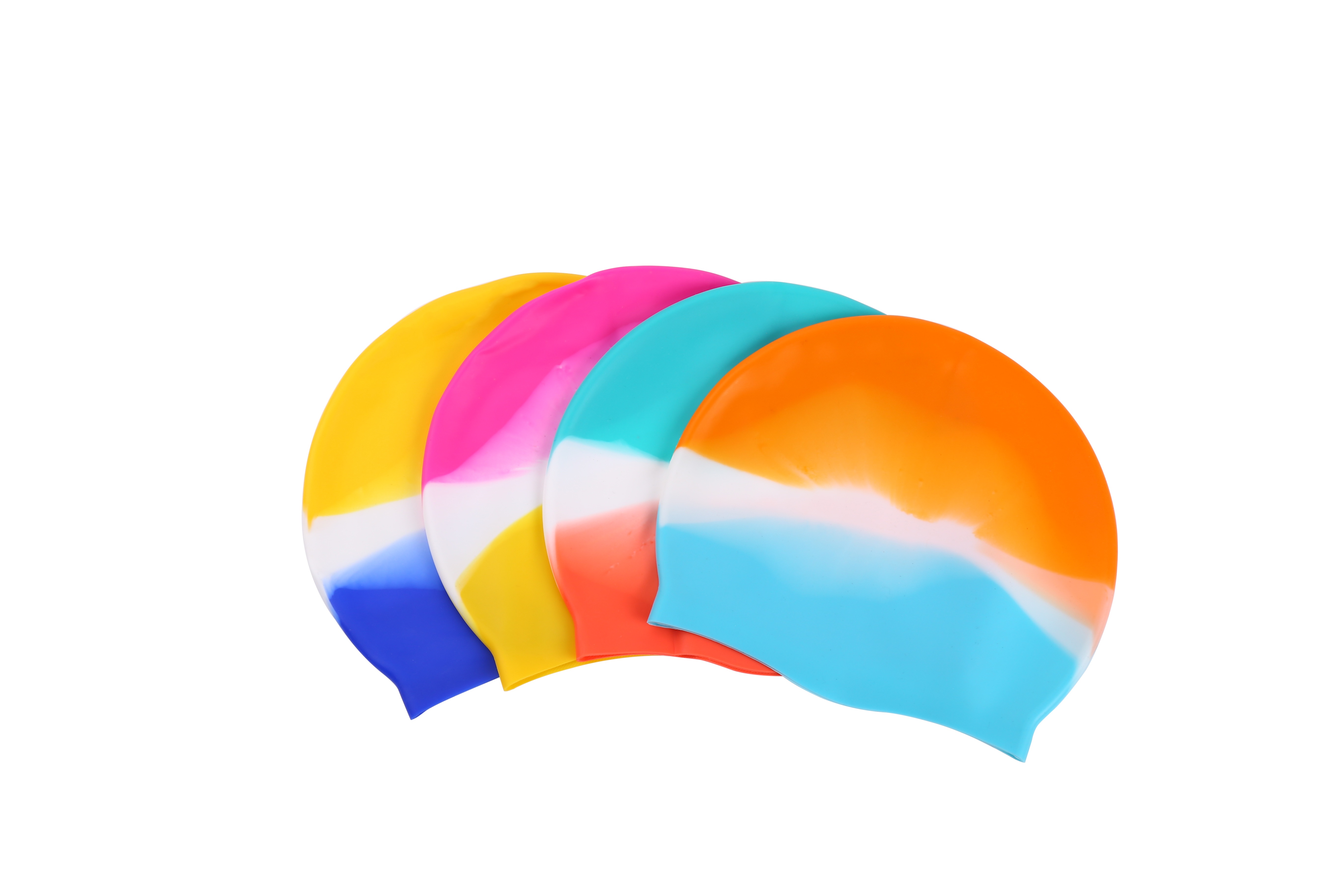
The persistent annoyance of swim goggles sliding off a silicone cap starts long before the first lap. Most failures happen at the narrow strip where the goggle seal meets the cap's rolled edge – two materials chosen for stretch and water resistance, but rarely for their ability to grip each other. Designers often overlook that a cap's hem folds outward, creating a tiny ledge that pushes the goggle frame upward as the head moves.
One effective fix is to rethink the goggle's inner rim geometry. Instead of a continuous smooth curve, a shallow chevron pattern or a set of micro-ridges aligned perpendicular to the cap edge can bite into the silicone without causing pressure points. Pair that with a slightly tacky overmold on the outer top corner of the goggle, and the cap stays anchored even during flip turns. Testing with different cap thicknesses matters: a 0.8mm racing cap behaves differently from a 2mm training cap.
It's also useful to widen the goggle strap's side anchors so the rear strap pulls more horizontally across the cap, reducing the upward peel force. Some designers add a small lip or wing that tucks under the cap's bottom edge, turning the clash into a deliberate interlock. The goal isn't just friction – it's shaping the contact zone so the cap and goggle work as one unit rather than two slippery surfaces fighting for the same real estate.
Hair Pull Test: Why Inner Coatings Make or Break Comfort
Run your fingers through a hairpiece and you'll feel the difference immediately. The hair pull test isn't about yanking strands—it's about how smoothly the base moves against your scalp when you touch, brush, or simply turn your head. Inner coatings sit right where the unit meets skin. A rough or tacky coating grabs at natural hair and creates that nagging pull, while a slick, low-friction finish lets each strand glide without resistance. That tiny layer decides whether you forget you're wearing anything or count the minutes until removal.
Silicone, polyurethane, and gel-based coats each behave differently under real conditions. Silicone tends to feel silky and reduces friction fast, but it can trap heat if applied too thick. Polyurethane offers a more secure, non-slip grip for active days, yet it needs a breathable pattern to avoid sweat buildup. Gel coatings sit somewhere in between—soft against the scalp but prone to becoming sticky as body heat rises. The best inner coatings aren't just smooth at first touch; they stay stable through humidity, oil, and repeated wear without turning gummy or peeling at the edges.
A cheap coating often fails the pull test after a few washes or a single hot afternoon. You'll notice more snagging near the hairline, redness where the edges rub, or that constant urge to adjust the piece. Quality coatings, on the other hand, maintain their glide and cushioning over time. Before choosing a hair system, slide a few strands between your fingers and press the base against the back of your hand. If it drags, skips, or leaves a residue, comfort will suffer—no matter how good the hair looks on top.
Tug, Stretch, Repeat: The Real Stress Points on Swim Caps
Most swim caps don't fail from chlorine alone. The damage happens in those quick, repeated motions before and after each lap session. When you tug at the edge to slide it over your forehead, your fingernails dig into the silicone or latex at the exact same points—usually just above the ears. That thin line of material gets micro-tears long before the crown shows any wear. Stretch it too far over a bun or a thick hair tie, and the stress concentrates at the nape, where the cap is already fighting to snap back.
Latex caps are more forgiving at first, but they stiffen faster after repeated stretching. Silicone holds shape better, yet the seam at the center can split if you pull from one side only. Swimmers who yank the cap off by grabbing the top and pulling straight backward put uneven pressure on the same crease every time. Over a few weeks, that crease turns into a crack, and then a tear that runs straight down the middle.
The fix isn't gentle handling—it's changing where you grip. Rotate the starting point by an inch each time you put the cap on. When removing, pinch both sides near the temples and roll it upward instead of dragging it over dry hair. And never leave a cap crumpled in a swim bag; folded edges become permanent weak zones that tear the moment you stretch them again.
Head Shape Diversity: Why 'One Size Fits All' Fails Most Swimmers
Head shape is rarely a simple oval. Some swimmers have a broad forehead with narrow temples, while others carry more volume at the back of the skull. A rounded crown, a flatter occiput, wider cheekbones—these differences change how a cap or goggle frame sits against the skin. When a product is built around a single average mold, it ignores that variation almost by design.
The result is predictable if you spend enough time on a pool deck. One swimmer pulls a cap down and feels immediate pressure above the ears; another finds the same cap slides up after two laps because there isn't enough material to grip the occipital ridge. Goggle sockets that seal perfectly on a narrow face may leave deep marks on a wider one, or let water in at the temple. These are not signs of a wrong head—they're signs of a limited fit range.
Fit systems that actually work tend to share a common trait: they stop assuming one silhouette fits everyone. Adjustable nose bridges, multiple cap sizes, softer gasket materials, and lower-profile frames all exist because head shape diversity is real. Swimmers who struggle with leakage or pressure aren't an edge case; they're a reminder that "average" is just a statistical midpoint, not a human template.
Durability Check: Small Details That Extend Cap Life
Most people assume a cap fails because it gets dropped or crushed, but the real wear starts much earlier—at the threads, the seal, and the hinge. A quick look at how the cap seats against the bottle neck can reveal a lot. If you notice tiny cracks forming around the inner lip before any external damage shows, that is a sign the material is fatiguing from repeated opening and closing. Rotating the cap slowly while applying light downward pressure lets you feel for rough spots or uneven resistance. Those subtle catches often predict a split long before it becomes visible.
Another overlooked detail is the liner. Many caps rely on a thin foam or plastic disc to create a leak-proof barrier, but that liner can deform with exposure to heat or certain contents. Every few weeks, press your fingertip against the liner and check for flattening, brittleness, or loss of spring. If the liner no longer bounces back, the cap might still thread on fine but will gradually lose its seal. Replacing just the liner—where the design allows it—can add months to the cap’s usable life without changing its look or feel.
Small adjustments in handling also make a difference. Instead of snapping the cap shut or twisting it until it stops with force, stop as soon as you feel the threads engage and then give a quarter turn more. This habit reduces stress on the retaining ring and hinge points, the two areas most prone to hidden fractures. For caps with a flip-top, avoid pushing the lid back farther than its natural open position. That tiny overextension is often the starting point for a crack that spreads across the dome within weeks.
FAQ
Silicone is generally the top choice for durability because it resists tearing and doesn't degrade as quickly in chlorine or sunlight. But not all silicone is equal—look for food-grade or medical-grade silicone with a thickness around 0.8mm to 1.2mm. Latex is cheaper and stretchier but breaks down faster. For a balance of comfort and lifespan, some manufacturers blend silicone with a small percentage of elastomer to increase flexibility without sacrificing tear strength.
Long or thick hair needs extra interior space and a softer edge. A good manufacturer will use a 3D mold that adds volume in the crown area and a reinforced but smooth edge band that doesn't grip too tightly. Some brands add a subtle inner texture or use a slightly thinner silicone around the rim to reduce tension points. Ask for prototypes with different durometer ratings—a Shore A hardness of 30 to 40 is usually comfortable while still staying secure.
Durability often comes down to the mold design and curing process. Cheap caps are often injection molded with uneven wall thickness or rushed cooling, creating weak spots. A durable cap will have consistent thickness, polished mold surfaces to avoid micro-tears, and a post-curing step that stabilizes the material. Also check the rim—caps with a double-folded edge or reinforced hem are less likely to split after repeated stretching.
Silicone is generally more durable in terms of chemical resistance and UV stability, but some high-quality latex caps with added antioxidants can last longer than cheap silicone. Latex also has more stretch, which can be more comfortable for swimmers who pull the cap over large hair volumes. However, latex can cause allergies and degrades in heat and oil. If durability is the main concern, go with a well-formulated silicone; if you need extreme stretch and lower cost, a treated latex may work but expect a shorter lifespan.
Customization shouldn't reduce fit. A manufacturer can print logos with silicone ink that flexes with the cap instead of cracking. For full-color patterns, look for in-mold labeling or heat transfer that bonds without stiffening the material. Embossed logos are durable but avoid deep debossing on the stretch zones. Always request a sample with the same decoration process you'll use in bulk to test stretch recovery.
Hair pulling often comes from a sharp or overly tight rim edge. Ask the manufacturer to use a rolled edge design or a soft silicone compound with lower durometer at the rim. Marks on the forehead can be reduced by making the front band slightly looser than the back, using a contoured 3D shape, or adding a thin comfort strip inside. Testing with different head circumferences and hair densities is crucial—don't rely on a single size.
Many factories are now offering silicone made from bio-based or recycled materials, though performance can vary. Some manufacturers are developing thinner, lighter caps that still maintain durability through advanced polymer blends. Another trend is using laser perforation or micro-textures on the interior to reduce suction and improve comfort without adding bulk. Buyers are also requesting caps with UV protection additives for outdoor swimmers.
A reliable factory will perform stretch and recovery tests, chlorine resistance aging tests, and tear strength tests according to ASTM or ISO standards. They should also do a fit test on head forms of different sizes and check for pinholes using a light box or air pressure. Ask for batch samples from the production line, not just a pre-production sample, and confirm they can provide a certificate of compliance for skin contact materials.
Conclusion
When working directly with swim cap factories, the first hard truth is that silicone compound choice matters more than anything else. A cap that falls apart after a few months in chlorinated water or turns gummy under UV exposure usually uses a low-durometer filler blend. The better manufacturers specify high-tensile silicone with UV stabilizers and test samples through accelerated chlorine aging, not just a quick dunk. Beyond material, real-world stress shows up at the crown and along the edge where fingers repeatedly tug the cap over hair. Reinforcing these zones with a slightly thicker wall or a micro-ribbed texture prevents the classic split that starts at the temple and runs backward.
Another overlooked area is the inner surface. A sticky or overly slick coating turns a cap into a hair-pulling nightmare, so factories that care will use a matte, low-friction inner finish or a food-grade powder wash instead of cheap silicone oil. For the goggle clash, a non-slip edge bead with a soft, rounded profile keeps goggles from sliding without digging into the forehead. And because head shapes vary wildly, the old one-size mold fails anyone with long hair or a larger crown; offering two or three graded sizes with a deeper back skirt reduces returns. Finally, small details like reinforced seam joints, a wider inner band, and a matte exterior that resists fingernail scratches can double the cap's usable life in a swim bag.
Contact Us
Contact Person: Wendy
Email: [email protected]
Tel/WhatsApp: 86 18807398467
Website: https://www.zlfswim.com